.svg)

Tacit Knowledge Is a Pattern of Attention Before It Is a Procedure


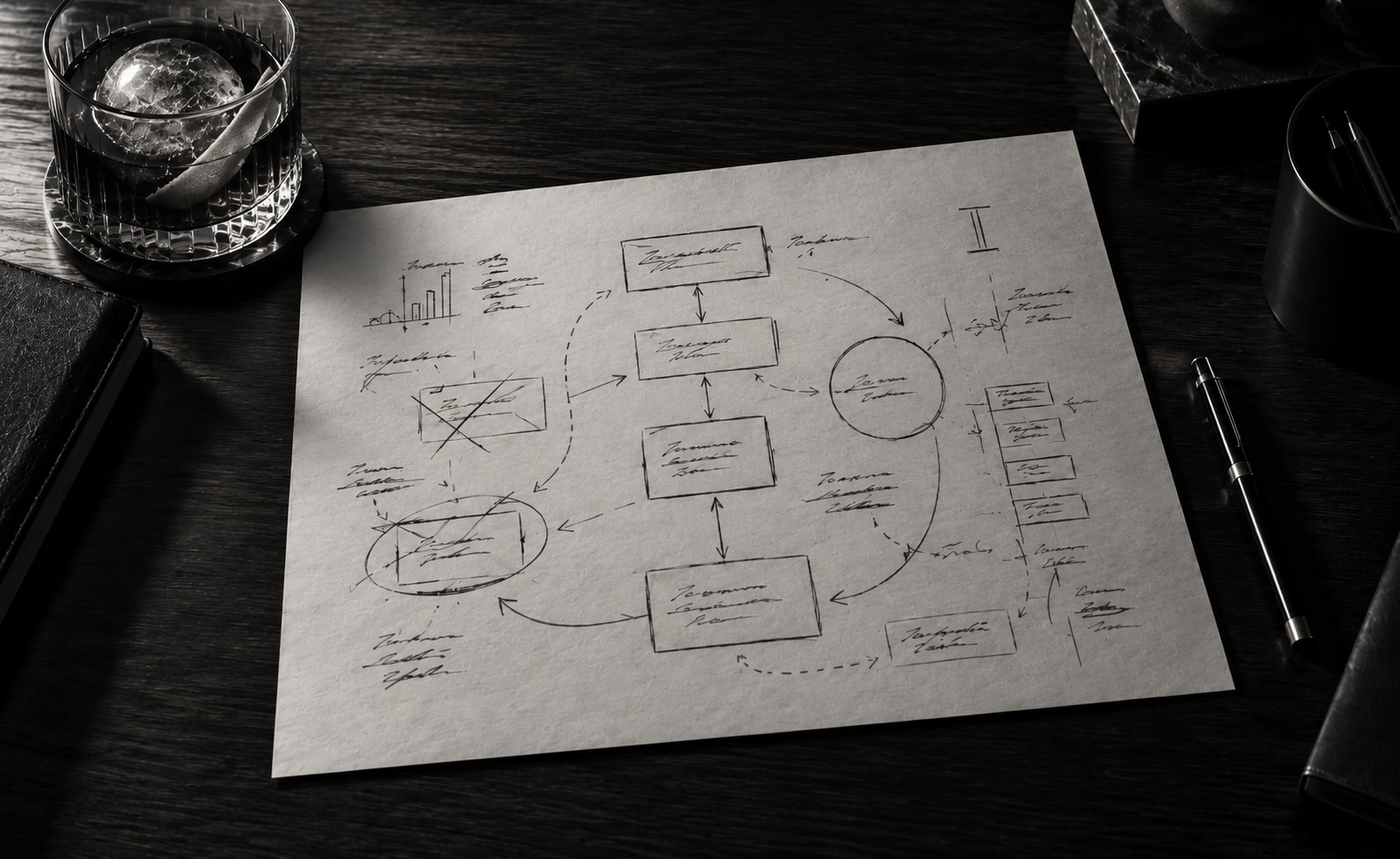
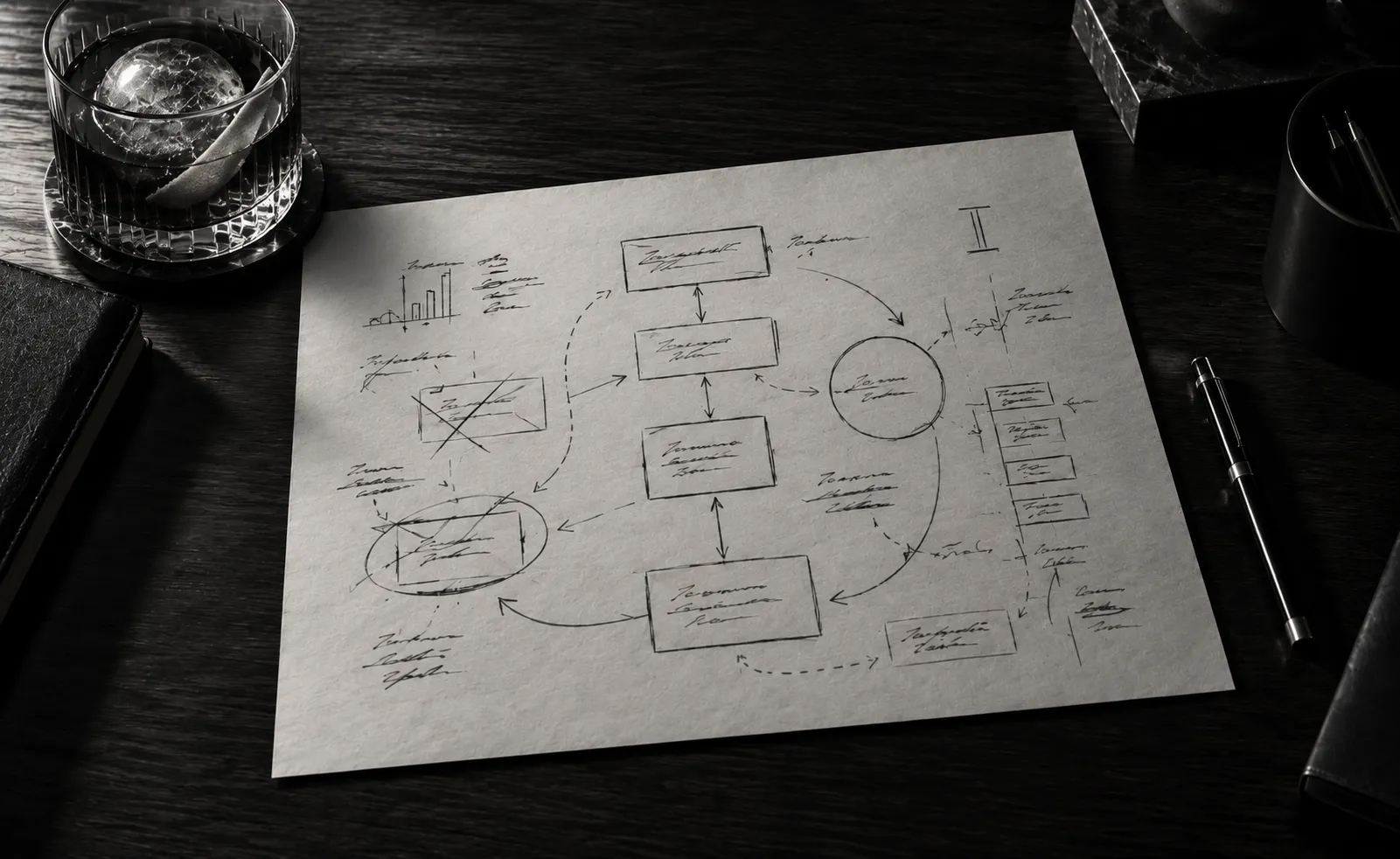
Most attempts to preserve expertise begin too late. They begin with the action an expert took and ask how that action can be written as a repeatable procedure. By then, much of the decisive work has already happened. A field of possible details has been sorted into what matters, what does not, what is changing, and what requires a response.
The procedure records the response. It rarely records the pattern of attention that made the response appropriate.
This is why tacit knowledge is often mistaken for an unexplained ability to perform. We see someone make a sound decision without consulting a manual, then assume the missing knowledge is hidden somewhere inside the action. I think it is more useful to look one step earlier. The knowledge may reside in how the person perceives the situation before choosing what to do.
Attention here does not mean concentration. It means organized discrimination.
An expert does not simply notice more. In many situations, expertise consists of noticing less, but assigning greater significance to the right details. Irrelevant variation recedes. A deviation that appears minor to someone else becomes conspicuous. Two circumstances that look similar are recognized as meaningfully different. Several visible facts become one pattern because their relationship matters more than their individual presence.
The novice may possess the procedure and still fail because the situation never presents itself in the right terms. The difficulty is not remembering the next step. It is recognizing that this is the kind of moment in which that step applies.
Every procedure contains a hidden clause: use this when the relevant conditions are present.
That clause carries more knowledge than it appears to. A rule can say, “If X occurs, do Y,” but someone must still recognize X. If X is simple and measurable, recognition may be easy. If X is a combination of timing, degree, sequence, context, and exception, the instruction has merely placed judgment inside the definition.
Additional detail does not eliminate the problem. Defining X more precisely creates more conditions that must themselves be recognized. A procedure can absorb a great deal of prior judgment, but it cannot fully specify the relevance of every feature without becoming unusable. At some point, a person must distinguish the situation described by the rule from one that only resembles it.
A live production document can specify the order of events, the timing of cues, and the actions assigned to each moment. It can preserve an enormous amount of operational knowledge. Yet a cue that appears exact on paper may depend in practice on whether a speaker has completed a thought, whether an audience response is still building, or whether an unexpected delay has changed the meaning of the next transition. The written cue is not false. It is incomplete in a particular way. It preserves what to do after someone has perceived what kind of moment has arrived.
The same limitation appears wherever situational judgment matters. A process may describe what counts as an exception, but experienced attention notices when an ordinary case is beginning to behave like one. A standard may identify an unacceptable result, but expertise may detect the sequence that is likely to produce that result before the threshold is crossed. A checklist may name the variables, but it cannot guarantee that each variable will be given the right weight under changing conditions.
Knowledge can therefore be explicit at the level of action while remaining tacit at the level of selection.
This distinction helps explain why documentation can be accurate and still fail to transfer expertise. The document may contain every visible step. What it lacks is the hierarchy of significance that governed those steps. It tells the reader what happened, but not which details made that action preferable to the available alternatives.
A record of a decision has the same weakness. It may preserve the choice and a concise rationale, yet omit the cues that caused one concern to outweigh another. Later, the rationale can be mistaken for a general rule. The decision is repeated because the language still sounds applicable, even though the original pattern of conditions is no longer present.
Documentation has not failed in such cases. It has preserved what it was capable of preserving. The failure lies in assuming that a record of the answer also contains the ability to recognize the problem.
I am wary of using tacit knowledge as a name for everything that has not been written down. Some knowledge is undocumented only because no one has taken the time to document it. Some is withheld. Some is habitual but trivial. Some can be explained immediately when the right question is asked.
The more consequential form is harder to isolate. It appears through distinctions a person can reliably make but may not yet be able to state. The person knows that two cases are different before possessing adequate language for the difference. The judgment is not irrational. It may be supported by a dense accumulation of comparisons, corrections, consequences, and exceptions. What remains tacit is not necessarily the conclusion. It is the perceptual structure that allows the conclusion to form.
Pattern recognition is sometimes described as if an expert were matching the present to a stored picture. That description is too static. Surfaces change. The same underlying problem can arrive with different visible features, while two nearly identical cases can require different treatment because one condition has shifted.
A useful pattern of attention recognizes relationships. It notices pace rather than only position, trajectory rather than only state, proportion rather than only quantity. The significant cue may be an absence, a delay, a contradiction, or a detail appearing out of its expected order. The pattern is not a photograph of a previous event. It is a learned sense of which variations alter the judgment.
That sense is what procedural language struggles to carry. “Watch for hesitation” may be intelligible to the person who already knows which hesitation matters. To everyone else, it raises unspoken distinctions. Duration matters. Timing matters. The baseline matters. The events immediately before and after may matter. A general instruction names the object of attention without transferring its calibration.
This is why exposure to more examples does not automatically produce expertise. Repetition can create familiarity with a surface while leaving the important distinctions untouched. Two people can encounter the same range of cases and accumulate different knowledge because they have not learned to attend to the same differences. Experience supplies material. It does not guarantee that the material will be interpreted well.
What travels between people, when tacit knowledge is genuinely transferred, is not merely a rule. It is a revised allocation of significance.
That revision often becomes visible through contrast. A person begins to understand not only what an expert noticed, but why a nearby detail was ignored. A case that initially appeared equivalent is separated from another case. A cue once treated as decisive is recognized as secondary unless it appears in combination with something else. The emerging knowledge lies in the boundaries between examples, not in any single example alone.
I would not call every such pattern intellectual capital. An expert habit may be highly personal, reliable only within a narrow circumstance, or supported by assumptions that no longer hold. Fluency can conceal error as easily as it can express mastery. A person may respond quickly because the situation is understood, or because an old pattern has become automatic.
The distinction matters because tacit knowledge is often granted a kind of mystique. If an experienced person cannot explain a judgment, others may treat the inability itself as evidence of depth. But difficulty of articulation does not establish validity. The pattern still has to produce distinctions that matter. It must remain responsive to evidence, reveal its limits under comparison, and permit correction when the environment changes.
A stale procedure is relatively easy to identify. Its instructions refer to obsolete systems, roles, or conditions. A stale pattern of attention is more elusive. The person continues to notice real things, but they are no longer the things that govern the outcome. Expertise then becomes a way of selecting yesterday’s signals from today’s situation.
This is one reason making tacit knowledge explicit can be valuable, even when articulation does not make it fully transferable. Language creates the possibility of inspection. It allows the expert pattern to be compared with other patterns and tested outside the circumstance that formed it. What was once experienced as “something feels wrong” can begin to separate into cues, relationships, assumptions, and thresholds.
Still, articulation is not a conversion from tacit knowledge into a complete procedure. Some of the knowledge may remain dependent on exposure and correction. Some terms will acquire meaning only through comparison. Some judgments will resist fixed thresholds because the weight of a cue changes with context. The gain is not that the procedure now contains the expertise. The gain is that the pattern of attention has become more available for scrutiny and reconstruction.
A strong procedure can embody earlier attention so effectively that later users no longer need to exercise the original judgment. This is often desirable. A threshold, sequence, or safeguard can stabilize a distinction that once depended on an individual expert. But that substitution works only while the relevant conditions remain stable. When the environment changes, the procedure cannot notice that its own assumptions have become questionable.
The original pattern of attention is therefore prior in two senses. It is often prior historically because someone had to notice recurring conditions before a procedure could be formed. It is also prior logically because a procedure cannot apply itself. Someone or something must determine that the present case belongs within its scope.
What makes expert attention durable is not its permanent accuracy. No pattern deserves that confidence. Durability comes from retaining enough of the distinctions behind the judgment that another person can recognize, challenge, and recalibrate them. Transferability does not mean removing people from knowledge. Knowledge does not use itself. It means the relevant discrimination can survive beyond the person in whom it first became reliable.
The deepest loss occurs when a procedure survives but the attention that once governed it disappears. The document remains executable, so the loss stays hidden. People can continue following the steps after no one can tell which changes would make those steps inappropriate.
Tacit knowledge is not merely the residue left after everything explainable has been documented. It is often the prior achievement that made explanation possible: the learned allocation of significance through which a situation became intelligible.
An action can be copied from a record. A judgment can be repeated by habit. But for expertise to survive its original holder, what must travel is not only the answer. It is the way the situation first became a question.
WHAT THEY BUILT.
WHY IT MATTERED.